Since 1948 CEC is the leading global network to co-create, manage and broker knowledge in learning, communication and participatory processes for the conservation and sustainable use of biodiversity. Over time CEC has helped the IUCN Program, members, commissions and partners to learn to change for the future and build public support for positive change in conservation and sustainable development. CEC brings to the conservation community appropriate tools, cultural, targeted and facilitated approaches to learning and participation, using the latest professional insights, methods and media.
Over the last sixty years CEC developed from a formal advisory body to the IUCN Council on conservation awareness and education into a formal knowledge network on learning, communication and knowledge management. While writing the history of CEC three questions arise. What is the value of a Commission? And in particular of CEC? What are lessons learned for the future?
A Commission network enables the IUCN program to have a direct impact on the daily professional activities of thousands of committed individual experts in a range of disciplines all over the world. In doing so it multiplies the IUCN vision, mission and programmatic messages far beyond the reach of the IUCN formal communication to its organizational members and the public. In return the IUCN program gains access to relevant peer reviewed knowledge far beyond the possibilities of the worldwide web and informal professional knowledge networks.
The CEC content may not be in the core of the IUCN program’s technical knowledge areas. However CEC brings vital knowledge to IUCN as technical and scientific information alone does not lead to change. And transformational change is needed at many levels in society to contribute to the conservation and sustainable use of biodiversity. To be relevant for IUCN, CEC should increasingly focus on the ‘chemistry’ of such change: how to frame the discourse, how to facilitate partnerships and how to manage individual, organizational and social learning processes.
Strategic planning of a Commission’s mandate and thus its added value to IUCN, prevents a Commission from becoming an ‘old boys network’ and a bureaucracy in itself. Especially when the Commission leadership also realizes the appropriate change in Commission membership and programmatic focus. Much can be won when knowledge can stream directly between CEC, component programs, other Commissions and IUCN members. Sufficient staff support to the Commission – in HQ and the regions – is vital to make such knowledge stream optimally. Relevance of CEC also implies investments in the future through allowing room outside the mandate for experiments, that later can be upgraded and up-scaled to be applied throughout the conservation community. CEC has demonstrated that it is best placed to experiment with such new approaches to building social capital or new knowledge management modalities for conservation.
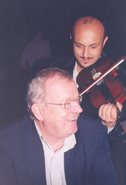
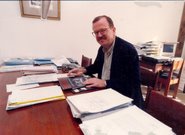
Frits Hesselink and Jan Čeřovský
Utrecht – Prague, June 2008
Friday, 11 July 2008


Sunday, 29 June 2008
Format for story telling about positive change
 In a workshop for protected area and ramsar site managers we focused on strengthening their capacities in communication and public participation. Especially to help them to be more effective in participatory planning for positive change. One of the exercises we did was practicing to tell stories about positive change. To help to analyze change, we provided a format, based on the case study format we developed earlier. The posting here is an example I gave from a change I saw take place some years ago in Slovenia.
What they realized was that participatory mapping of the issue and exploring options for change were a key communication interventions, that triggered change in knowledge and attitudes. For change in behavior and in the field mostly more and other interventions were needed and communication then mostly had a supportive role.
Friday, 6 June 2008
Asking questions
 Asking questions is an imperative part of any learning process. Sometimes it gets you into trouble, when you do not ask the right questions. Like when Sharon Stone – as I saw in a magazine – asked herself in public the questions: “was the way the Chinese treat the Tibetans nice? Was the recent earth quake in Sechuan province maybe the workings of the law of karma?” It caused her to loose advertising contracts in China and a ban on her movies. An over-reaction? Yes. The questions were not that bad, but at least the last one was a wrong question. Personally I would answer both questions with no. Karma is about the consequences of one’s actions. It is different from the laws of nature. The tectonic structure in the area is to blame for the earthquake. Not the Chinese. But that does not mean that there is some cause and effect at work here. Corruption and lack of enforcement of building regulations contributed to the collapse of schools and the deaths of so many children. Indiscriminate logging caused eroded slopes: an easy prey for massive land slides, natural dams in rivers and the potential evacuation of almost a million people down stream. Nobody will know how much the wrong decisions, illegal activities and bad performance of those in power may have contributed to the current hardships of the people in Sechuan. Those guilty most probably are not among the victims. Maybe some of them will learn that some karma is at work here…! Maybe Sharon Stone has learned now about karma, about conditions such as laws of nature and about asking the right questions.
Tuesday, 3 June 2008
CEPA best practice
 The way Germany organized communication, education and public awareness around CBD COP 9 was a perfect example of CEPA best practice. The branding of the event and biodiversity was perfect. The interaction with stakeholders through the Nature Alliance was a good way of using intermediaries and multipliers to reach many groups. The various events e.g. lectures, music, sports were well designed to reach out to the general public. There were activities for young people. And it was all connected in one big campaign. I did not see the strategy behind all this, but if there was a prize for CEPA it should go to the German Ministry of Environment.
Saturday, 31 May 2008
New learning for biodiversity
 Biodiversity in schools is often seen as normal biology. To show Parties to the CBD that another approach is possible, the German Ministry for the Environment, Nature Conservation and Nuclear Safety published an English translation of one of their education kits. The kit – Biological Diversity, educational and information materials - is part of the German campaign to raise awareness for COP 9 and meant for school kids in the age of 12 – 16. The content is organized in six sections: species diversity worldwide, national parks and biosphere reserves, high-tech from nature, project suggestion, learning and competences check and background information for teachers. The kit contains worksheets and information sheets. The sheets are designed to copy for students. All references are to information on the web rather than to books. The kit is targeted to kids in Germany, but with some adaptations and additions teachers in many countries can use the materials. Or get inspired by it to develop their own version. To order the kit write to: bmu@broschuerenversand.de.
Thursday, 29 May 2008
Toward Public Participation in CBD Management
 Article 13 CBD recommends Parties to popularise the ideas of the Convention by undertaking communication, education and public awareness activities. Ana Kalinowska, CEC member and Director of the Warsaw Centre for Environmental Studies has published a book on how to faciltate processes towards public support and engagement in conservation and sustainable use of biodiversity. It show cases what works e.g. in schools, zoos, national parks, forestry and municipalities. The book is published in Polish. It is a welcome Polish complement to the CBD CEPA Toolkit. I hope the publisher will also make available an online edition, so that the CBD Toolkit online can link to this Polish addition.
Public Awareness Indicators
 A new postal stamp issued in April for the occasion of CBD COP 9 by the German government can serve as an indicator for public awareness. The polar bear on the picture is 'Knut' born in 2006 in the Berlin Zoo. An event that attracted quite some publicity. The stamp not only puts biodiversity on the table of German citizens when they write or receive a letter. The fact that the postal service choose this theme is in itself an indicator that biodiversity related issues are on the German public agenda. The launch of the stamp is accompanied with an information canpaign linked to the COP 9 awareness campaign.
Wednesday, 28 May 2008
Information alone does not lead to change
 One of the Environmental Conventions organizes a workshop for journalists. The day I attend, about ten staffs lecture to a similar number of young journalists and a few NGO staffs. They all use power points. After an expose of twenty to twenty five minutes there is just time for a few questions. Even those do not come easily. Then the expert has to run to a next meeting and a new presentation follows. Apparently the thinking of the experts is based on the deficiency model. When we give more information, journalists will understand and write more. During the coffee break one of the journalists confesses to me he would have left the workshop after the first presentation, were it not his trip and DSA are paid to attend. When one speaker is late, the participants exchange experiences among themselves: journalists are interested in environment; the news paper editors are not.
 It would help if experts used less jargon. And more time to build relationships. It made me think that it would be useful if we would introduce to the MEAs the contextual model. Communication works when one invests equally in trust, personal experiences, values and interests. And not in information alone.
Monday, 26 May 2008
CEPA Toolkit officially launched
 The CEPA Toolkit is now available to the Parties. It is extremely useful. Personally I have made use of it on several occasions. I strongly recommend it. I am grateful to the IUCN Commission on Education and Communication and Frits Hesselink the CEPA toolkit lead author for providing us with this publication, said Sylvi Ofstad during the Plenary of the 9th Conference of the Parties to the Convention on Biological Diversity. The toolkit and other aspects of the CEPA Program of Work were in more detail discussed and illustrated during the Meeting of the Informal Advisory Committee on CEPA and several CEPA workshops. The hardcopy version of the toolkit contains in 308 pages a range of fact sheets, examples and checklists. For the online version click here.
Friday, 23 May 2008
Biodiversity Day: a picnic to raise awareness
 The "Pan-European Biodiversity Picnic" aims to bring together leaders in government, private sector, NGOs and other stakeholders for a pleasant picnic in nature every year on 22 May, International Biodiversity Day. In addition to some seasonal fruits from extensive, organic orchards what else is needed for making the Picnic a success in your country? Commitment from an institution or organisation, which can mobilise stakeholders and devote some capacities for the organisational tasks. High-level representatives of various stakeholders, who are attracted to the Picnic both by the importance of the issue and the content of the picnic basket. A nice place in nature, which can be a scenic place for a friendly gathering. Preferably nice weather.
 The picnic organized by CEE and Countdown 2010 on Biodiversity Day in Bonn was a good experience. You want to read more click here.
Subscribe to:
Posts (Atom)