Showing posts with label change. Show all posts
Showing posts with label change. Show all posts
Saturday, 18 April 2015
Think Nature: A guide to using nature-based solutions
Together with CEC's strategic input, IUCN's Eastern and Southern Africa's Regional Programme published this educational documentary to show how communities living around the Mt Elgon in Kenya and Uganda use natural solutions, which are always available, to help tackle environmental challenges efficiently. The video is meant as tool for training sessions for county government officials of different departments in both countries to actively engage their sector in rolling out the IUCN approach for ecosystem-based solutions for climate change.


Thursday, 16 April 2015
Think Nature: Improving Community Resilience
Together with CEC's strategic input, IUCN's Eastern and Southern Africa's Regional Programme published this introductory documentary to show how communities living around the Mt Elgon in Kenya and Uganda use natural solutions, which are always available, to help tackle environmental challenges efficiently. The 6 minute video is meant to give people in goverbment, NGOs and academia a first glimpse on what is meant with nature-based solutions.
Rising Stewards: Improving Community Resilience
Together with CEC's strategic input, IUCN's Eastern and Southern Africa's Regional Programme published this introductory documentary to show how communities in Lira, Uganda and Garissa, Kenya are using natural solutions, which are always available, to help tackle environmental challenges efficiently. The 8 minute video is meant to showcase the results of the IUCN apporach of nature-based solutions to donors and international organizations to trigger funding to roll out the IUCN pilot projects on a larger scale in both countries. The first donor already has committed to continue to support the IUCN approach. See also the post I wrote immediately after the field interviews and video shooting about change strategies.
Sunday, 29 March 2015
Saturday, 20 September 2014
Change strategies: two stories

Improving community resilience through nature
based solutions in Kenya
Boka –
situated in the North Eastern region of Keya - in our grandmothers time
provided the only water resource for all pastoralist communities in a vast
dryland area of over 200 km2. The Boka wells and rainy seasons offered enough
water for people and cattle and there were no conflicts of any significance.
Problems that did surface were dealt with by the council of elders.
After
independence a disconnect developed between the new legal systems governing water, land management, other
jurisdictions and the old traditional system of the council of elders dealing
with these issues. Population was growing, so were the numbers of livestock.
Climate change caused an increasing numbers of droughts which caused water scarcity
and conflicts over access to water.
These conflicts
often came to a climax of serious fights over who can feed his animals first and
there is no family that has no history of family members being killed or
severly wounded in such fights. These desperate situations led to attention of
donors and investments of them in water management and related themes in the
area. IUCN put in place a series of interventions that repaired the disconnect
between the old and new water governance systems by helping local authorities
and communities formulate Bylaws that regulate access and use of water. IUCN
also put Infrastructure in place to channel water from the river in the rainy
season into the wells and keep them better fed than before. This all being
accompanied by a series of capacity development and awareness raising activities.
Now the
settled and pastoral communities in Boka can use the water resources for both
human consumption and for livestock in a an organized way and satisfying all
basic needs again. Any conflict is solved through dialogue and other measures
foreseen in the Bylaws. The water conflicts out of the way means a huge
positive change for the communities as far as health is concerned, family
income, education for children and peace in the communities. More investment in
water management infrastructure and local capacity development will offer even
more opportunities for communities to cope with the effects of climate change
and increased droughts.

Improving community resilience through nature
based solutions in Uganda
Arwotngo –
situated in the Northern region of Uganda - in our grandmothers time was a
peaceful Parish, where people lived a simple but good life. They had ample
livestock and the fertile soil provided many opportunities for agriculture.
People were used to drinking milk and eating meat and vegetables. There was no
indiscriminate cutting of trees and when you needed one you went to your
grandfather to ask for permission. There were no conflicts of any significance.
Problems that did surface were dealt with by the council of elders.
In the
nineteen seventies things began to change. Tribes with weapons started to rob
us from our livestock. Women were raped. Children were abducted and never
returned. Then all out war started. There was little food. When the LRA entered
the stage things became even worse. In 2002 all people fled from the rural
areas to Lira, where we lived in refugee camps depended on International Relief
Aid. Outside the camps it was not safe. Inside we barely survived. In 2005
things began to improve and the first community members went back to their
homes. In 2008 the majority was back.
Life in the
camp was bad, but returning home was maybe worse. We had no international
support anymore, we had no housing, no food no nothing. So people started to
cut trees to cultivate crops and sell charcoal to the trucks that came from
Lira to collect the fuel. Wetland were turned into rice paddies. There was a
lot of domestic violence, we were constantly struggling for money. Water points
were shared between people and livestock, there was no sanitation causing a
range of health issues. Wetlands were drained and during droughts we had almost
no water and in the rainy season the rivers flooded our crops. Then IUCN came.
First we thought they were going to grab our land, as we were growing rice in
the wetlands. Later we realized they meant well with us as they gave us small
sums of money we could use to buy seedlings.
We
established a relationship of trust and they taught us saving, agro-forestry,
the use of fruit trees, e.g. the shea nut tree. They started conservation fund
from which we could borrow money to improve our income, on the condition that
we participated in their water management activities by demarcating riverbanks,
fencing water points, organizing ourselves to formulate by-laws etc. Very soon
we saw the positive results: more and better quality water, more income for
households, more peace at home, no more tree cutting, less floods. Now we have
a much more positive vision for the future and we feel we can cope better with
extreme droughts and floods.

In Kenya
the land and water management changes did not really affect business as usual
in the community. The men continued to be pastoralists, their women looked
after their families, they started jointly a garden to diversify their
livelihoods. The behavior change of community members was driven by the harsh experience
of two years of extreme drought: no water for people and cattle. The pain of
changing was far less than the pain of not changing. Improving and co-managing
the water resources, especially by integrating the traditional governance
systems was not a painful change. The only big change was the increased role of
women in managing the resources and the new phenomenon of girls going to school (a consequence of the new position of their mothers). A pain that men at last could deal
with.
In Uganda a similar strategy to technically improve land and water management, diversify livelihoods, strengthen self governance and learning did not work automatically. People were not interested to participate in the IUCN project. In the end they asked for a community revolving fund for small loans as a condition to participate in the project. Here the pain of changing without the fund would have been far bigger than the pain of not changing. Giving up their charcoal burning and rice paddies without an alternative would mean no income. In the camps they had learned to trade and set up small businesses, in the fund they saw the opportunity to use these skills and have a source of income for the short term. Fortunately IUCN was flexible enough to adapt their strategy. Then the change in the community started to develop along similar lines as in Kenya.
In both countries women were driven by values as self-direction (they saw the opportunity to become more independent) and security (they realized the importance of diversification of livelihoods). The men were driven by tradition (the by laws gave a new impetus to the traditional governance intstitutions such as the Council of Elders). These values proved stronger for both men and women than the values underpinning their behavior before the project came. For men driving values had been power (men are the owners of the cattle and that was more important for them than anything else) and hedonism (easy life). The behavior of the women was mostly driven by conformity (obedience). To upscale the project it is important to take into account the driving values of current and desired behavior.
Sunday, 3 August 2014
Human values

This is what I learned from Stanley Asah in our workshops on conservation psychology. Human values are transsituational goals of varied
importance, that serve as guiding principles in people’s personal life and in
the life of their society.Values are goals or deep rooted beliefs. They pertain
to a desirable end state or mode of conduct. Values transcend specific
situations. Depending on the person some values are more important than other
values. People have individual systems or patterns of value priorities.
Values are acquired through socialization with dominant
group values and personal experiences. Values are relatively very stable, much
more than attitudes, cultural influences, worldviews, perceptions or influences from the social
environment. Individual value priority systems determine one’s identity and
behavior. Values interact sometimes in conflicting ways.
Ultimately values drive people’s behavior, serve their interests, are
standards for judging others, and enable people to cope with reality through
transforming existential necessities into expressible specific values to
facilitate communicative action. Values are responses to our needs as
biological organisms, for coordinated social interaction, for the smooth functioning
and survial of social entities.
Universal human values are salient motivations towards the following different end goals:
1.
Power – social status and prestige, control or
dominance over people or resources (the end goals is authority and or wealth)
2.
Achievement – personal success through
demonstrating competence according to social standards (the end goal is to be successful,
capable)
3.
Hedonism – pleasure and sensuous gratification
for oneself (the end goal is to have pleasure, enjoying life)
4.
Stimulation – Excitement, novelty and challenge
in life (the end goals is to have a daring, varied life)
5.
Self-direction – independent through choosing
action, creating, exploring (the end goal is creativity, freedom, curiosity)
6.
Universalism – understand, appreciate, tolerate
and protect the welfare of all people and nature (the end goals is equality,
justice, protecting the environment)
7.
Benevolence – preserve and enhance the welfare
of people with whom one is frequent personal contact (the end goal is to be helpful,
honest, forgiving)
8.
Tradition – respect, commit to and accept the
custums and ideas of traditional culture and/or religion (the end goals is to be humble,
devout)
9.
Conformity – restraint of actions, inclinations,
and impulses likely to upset or harm others, violate social expectations or
norms (the end goals is politeness and obedience)
10.
Security – safety, harmony, and stability of society
of relationships and of self (the end goal is compliance with social order)
11.
Meaning – find meaning in life, spiritual life,
inner harmony (the end goal is spiritualiy).
Thursday, 5 June 2014
Leadership or wisdom
I have always had some difficulties – for many reasons – with the concept of leadership. One reason e.g. being that after all this years of sustainability leadership investments, I ask myself: in which positions did these students finally land, where can we see the impact? And people Ghandi never were trained as leader nor did he like to be a leader, however hundreds of thousands wanted to follow him. So I was very pleased when a few weeks ago I saw this on the net about thought leadership. For me we should - like Lao Tse - not talk about leadership but about wisdom.
Thursday, 1 May 2014
Concept note for an anti-rhino-poaching campaign
Asked to comment on a project proposal for an anti-rhino poaching campaign,
I noticed that it was very much an activity driven
project proposal. My reaction was: "next time
before starting to fill in the donor's template make a short concept note that
you circulate to others to get input. Now it is difficult to give strategic
advice as there is no real strategy. The project proposal immediately focuses
on activities that seem to be fun and not on desired results in specific
audiences. For me the main reasoning of such a concept note in should be
something like this:
All signs
indicate that Rhino poaching in Namibia will be an increasing issue in the very
near future. The entry of international organized crime into Namibia will not
only threaten species and decrease Namibia’s natural heritage and capital, but
it also will introduce other forms of crime and corruption, damage Namibia’s
reputation as a tourist destination, negatively affect the life of people in
local communities to name only a few consequences. Legislation, law enforcement
and economic measures alone will be insufficient to adequately tackle the
issue. In reality what mostly happens is
that politicians call for committees or expert meetings; national enforcement
officers put an other priority on their list; local enforcement officers are
confronted with again another priority and continue business as usual;
other ministries look away as do small and medium enterprises who may suspect
their clients are involved in illegal wildlife trade. In short these
instruments may not work without a serious investment in awareness raising,
attitude and behaviour change of a number of actors.
This
project offers an opportunity to help realize a future without Rhino poaching
in Namibia. A future of Namibia as an African country where rhinos and other
wildlife flourish. A future where parliamentarians are keen to set the right
priorities for appropriate legislation and governance. A future where law
enforcement institutions and officers are aware of the challenges, are immune
for bribes and motivated to take these challenges head on. A future where
the relevant ministries mobilize funds to provide financial incentives to local
communities to monitor wildlife and immediately report crime or criminal
intruders. A future where there is a broad support in Namibian society for all
efforts to prevent, reduce and eradicate poaching, where travel agents, hotel
owners, car rentals, restaurants and shop owners do not facilitate in any
way the stay and operations of people involved Rhino poaching. Where media give
positive feedback on rhino conservation successes, where they provide education
and are a channel for messages from local people and bottom-up initiatives.
Where media make rhino conservation the talk of the town and stimulate word of
mouth. A future where rhino is a broadly shared national emotion!
The vision
of this project is that to reach such a future, one needs to raise awareness
about the uniqueness of the rhino, its
innocence, its beauty, its place in folk tales. People also need to know of the
heroic activities of normal community members and organizations who in the past
and today already are conserving the rhino, the opportunities for many in
Namibia to better capitalize on the current rhino population, the negative
impacts that wildlife crime will have on society if no action is taken, the
concrete possibilities people have to contribute to rhino conservation. The way
to raise this awareness is not by telling people what is good, but by appealing
to their traditional value systems and link these values with the Rhino issue:
how the rhinos in our community make us happy; how it is a longstanding
tradition and normal in our society not to kill rhinos; how we view in our
culture rhinos and other wildlife as integral part of our natural environment
almost like family; how we protect the innocent rhinos against poachers
who want to earn a quick buck; how we see rhino conservation as part of our
social justice in Namibia, how we see it as immoral to in anyway assist
poachers and illegal traders.
The
strategic initiatives this project offers – when designed and executed fast
enough and well enough will make the vision described above a reality. The
initiatives comprise activities of compiling and distributing local stories,
individual stories, children’s drawings, songs, poems, music events, campfire
events, competitions and other cultural activities that illustrate how
traditional and cultural values link with rhino conservation. Some activities
are focused on the general public and distributed through mass media. They
provide the general messages and create the feel, emotion and motivation for a
Namibian future with Rhinos and without poachers. Other activities are tailored
strategically to specific audiences, e.g. schools, universities,
parliamentarians, law enforcement, tourism SMEs etc. They appeal to specific emotions and values of each
target audience and convey concrete messages of how they can contribute to a
future of Namibia with rhinos and without poachers. The activities
are initiated by a coalition of government institutions and NGOs and
coordinated by Natuye, with strategic advice of IUCN CEC. The costs of such a
project far exceed the current budget of the proposal. If that is a problem you
make this a pilot project that shows how it can work and explores ways to roll
it out over the whole nation.
Thursday, 21 March 2013
Learning from the mental transformation process
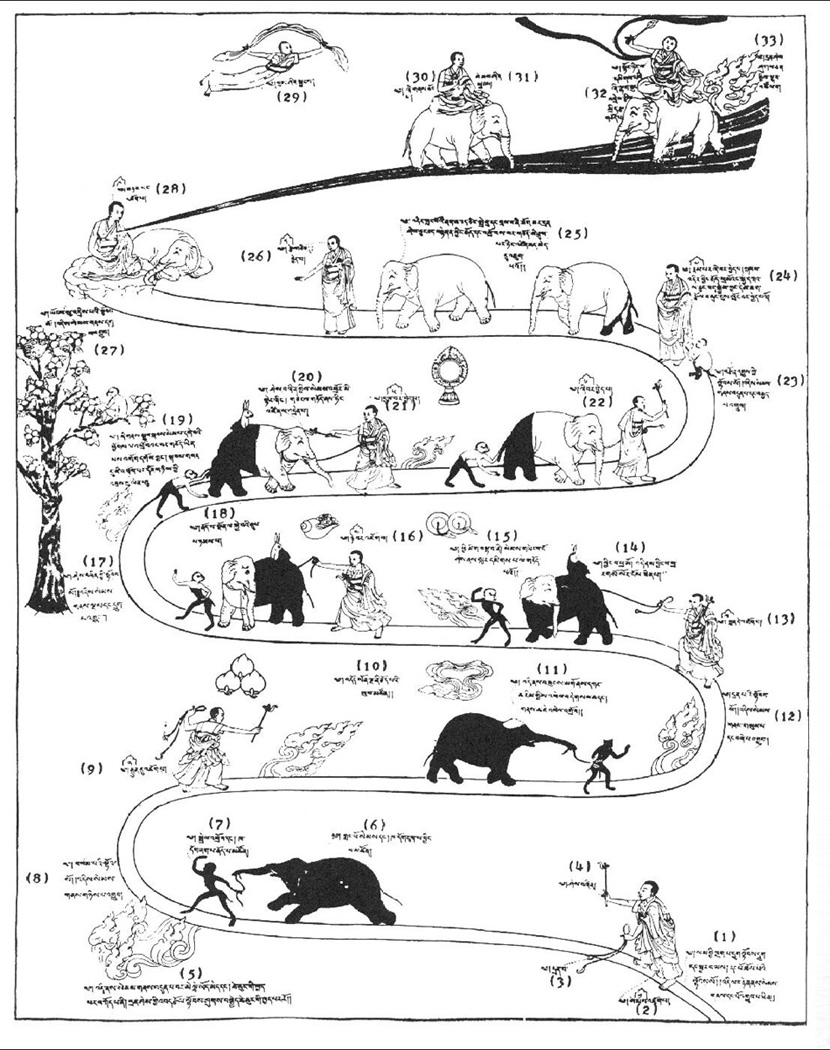
1. analyzing the situation
2. identifying the behaviour we want to change
3. defining desired behaviour
4. analyzing obstacles for change
5. analyzing motives for change
6. making change easy
7. making the new behaviour normal and desirable
8. change has turned into a habit
9. we understand everything changes and all phenomena are interdependent
10. we apply the learning about change in other spheres of life.
Most important is to realize that the end is not static, but the beginning of a new cycle to create more impact.
Wednesday, 20 March 2013
The secret of change

The secret of change is not to focus
all your energy on fighting the old, but to focus on building the new. This quote from Socrates keeps creeping up in my mind while working with the new European Natura 2000
strategic planning tool. This Prioritized Action Framework (PAF) focuses on
threats to species and habitats. The tool tries to analyze all the reasons why
we are losing biodiversity and tries to provide priority reasons and measures for
investing in biodiversity.
I wonder whether it would lead to real change. To focus on reasons is almost like to focus on excuses why we did not achieve conservation results in the first place. It is almost as giving in to the habit of procrastination, not doing what we set out to do and getting away with. This common psychological 'failure' habit of people, institutions and society is the key obstacle for conserving biodiversity.
So maybe the tool should focus or at least also make an effort to focus on what we can learn from conservation results and how we can realize more results. Results are driven by success habits, e.g. commitment, consistent action, accountability, doing the right things and joint celebration. The tool we need should help create a psychological environment that drives us to positive action. In the end change only takes place through action. Maybe conservationists in the European Commission, in governments and elsewhere should pay more attention to the psychology for a better world.
Monday, 4 March 2013
Psychology for a Better World
Psychology offers three core ideas if you want to make a difference towards sustainabvility:
1. People are happiness seekers. Connecting with people's desire for happiness triggers positive change qualities like creativity, cooperation and openness to change. We need to appeal to these positive emotions.
2. People are social. People are natural imitators. People change behaviour to blend with their environment. Doing and viewing are overlapping brainprocesses. So play into the idea what is normal and make visible sustainable behaviours of individuals and organizartions, so that they become normal.
3. People want to be good. They want to protect innocent others, and to be fair to others. These moral behavours are very powerful. Frame issues as social justice and make people to live up to their values. What they do in their lifestyle, what they do in their organizations and what they do as members of civil society.
Download Niki Harre's publication.
Monday, 25 February 2013
I'm in love with the forest. I want to protect it.
In inviting others to change behavior, it is useful to share the stories of others who changed: what it took them, how it reinforces their deeper beliefs and what makes them feel good about the change. This is a 4 years old video, in which Muktar tells about his change from being an illegal logger to becoming a ranger.
Friday, 4 January 2013

Thursday, 19 July 2012

Tuesday, 12 June 2012
Change starts with experience and belief
 Mainstreaming interventions at the action and result level are difficult when they are not supported on the level of experience and belief. L’Orient le Jour reports in an article today about conservation organizations in Lebanon trying to find support for the implementation of a hunting law that regulates hunting and aims to address illegal hunting and the massacring of domestic and migrating birds. In the press the conservation efforts are pictured as an anti-hunting front. Hunting is very popular for men in Lebanon, who already as youngsters get their first hunting rifle. Without offering the experience of nature in a different way, and without changing the belief that hunting proves your masculinity, it will be difficult to find enough police to make an impact on the bird populations.
Tuesday, 29 May 2012
Beliefs stronger than comprehension

Monday, 28 May 2012
Mainstreaming = change

Wednesday, 25 April 2012
Unilever's 5 Levers for Change
Consumer behaviour change is one of todays topics in the Sustainable Living Lab. Next to the video there is a publication you can downlad.
Wednesday, 16 November 2011
'Stories, Sizzle, Salience & Social Proof'
Futerra Co-Founder Ed Gillespie delivers a speech for the 3 Pillars Network Sustainable Behaviour Change conference in Sydney, Australia. November 2011
Tuesday, 13 September 2011
The Girl Effect
Awareness raising is not the same as behaviour change. This two minute video has a powerful message that analyzes the issue of gender and poverty eradication. The objective is to have
the audience surf to the girleffect to learn more and join the movement. The message is: the Girl Effect is a solution to poverty. If we do our part, 600 million girls in the developing world will do the rest. This message would be even more powerful if it clearly explains what it means if we do our part - what is it I can do to help bring about positive change. Awareness itself does not lead to change. Action does.
the audience surf to the girleffect to learn more and join the movement. The message is: the Girl Effect is a solution to poverty. If we do our part, 600 million girls in the developing world will do the rest. This message would be even more powerful if it clearly explains what it means if we do our part - what is it I can do to help bring about positive change. Awareness itself does not lead to change. Action does.
Subscribe to:
Posts (Atom)